

FEI Opens LA28 rule revision ahead of General Assembly in December.
The review of the FEI Regulations for the Los Angeles 2028 Olympic and Paralympic Games, presented at the FEI Sports Forum in Lausanne held 30-31 March 2026, was framed as a relatively limited revision exercise. Yet the discussion that followed made clear that key structural questions—particularly around format, flexibility and fairness—remain very much alive within the sport and the Olympic disciplines.
Opening the session, FEI Executive Director of Sport & Games Áine Power outlined a consultation process that will run throughout 2026 before a final vote at the FEI General Assembly in December. While the proposed changes themselves were presented as largely technical, the exchanges from the floor quickly moved beyond detail into broader questions about the direction of Olympic equestrian sport.
Format debate returns: pressure on the three-rider system
The most engaged discussion centred on the now-established Olympic format of three combinations per team.
François Mathy Jr, speaking as chairman of the International Jumping Riders Club (IJRC), questioned whether the current system has reached its limits. Referring to the recent Olympic experience from Paris 2024, he pointed to situations where a single poor round effectively eliminated teams early, and where later rounds could lose sporting relevance.
“I think we’ve seen the limit of the three riders,” he said, proposing a return—at least in part—to a four-rider format similar to the Longines League of Nations™, with three scores counting.
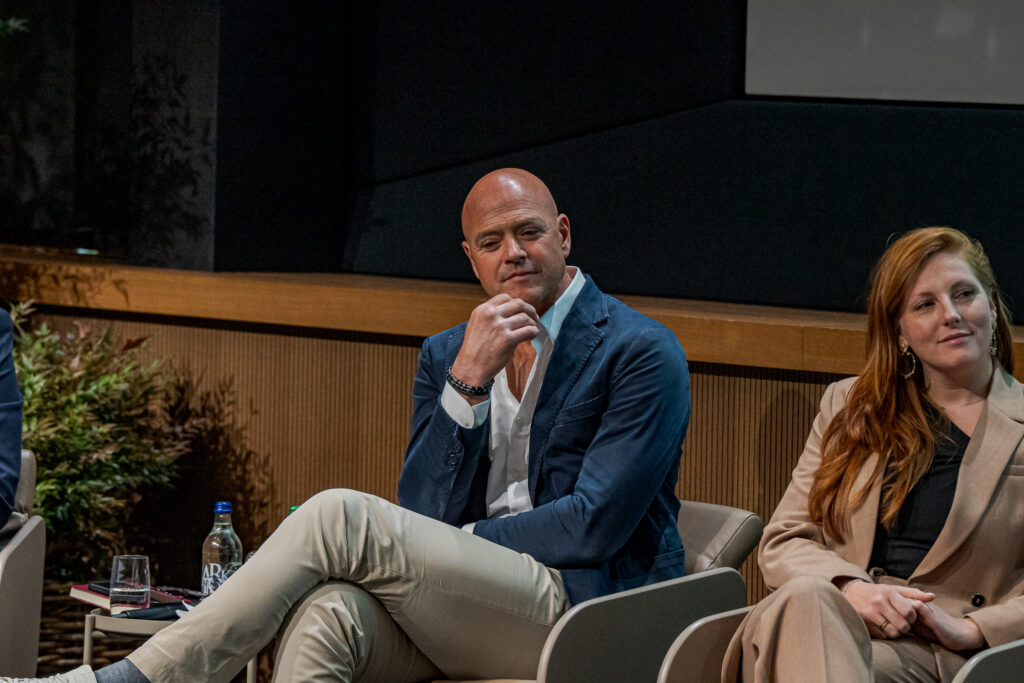
Mathy also argued for a stronger sporting link between the team and individual competitions, suggesting that performances in the team competition could be used as part of the qualification for the individual final, rather than relying on a single qualifying round.
The response from the FEI was firm and grounded less in sport than in Olympic constraints. Áine Power pointed to the fixed athlete quotas imposed by the International Olympic Committee—75 in jumping, 65 in eventing and 60 in dressage—as a non-negotiable limit. At no point, she stressed, can the number of active combinations exceed those quotas.
Todd Hinde, Director of jumping, added that the current format was also designed with accessibility in mind. Combining team and individual competitions, he argued, would increase complexity and make the sport harder for a general Olympic audience to follow.
The exchange underlined a familiar tension: between sporting depth and Olympic simplicity.
Pre-competition changes and substitutions: system works—but questions remain
The now-established concepts of pre-competition changes and substitutions were broadly accepted as functioning in practice, but still raised questions around fairness and logistics.
Áine Power emphasised that the system had worked effectively in Paris, including under time pressure, and would remain largely unchanged for LA28. However, the introduction of stricter on-site requirements—linked to quarantine and biosecurity—prompted concern from national federations.
A key point of discussion was the definition of “on-site”. Delegates questioned whether horses based in the United States could gain a practical advantage over those travelling from Europe or elsewhere, particularly if arrival timelines differ.
The FEI response acknowledged that some operational details remain unresolved, with final procedures dependent on transport logistics and quarantine arrangements with the Los Angeles Organising Committee. The principle, however, was clear: a single deadline would apply to all, with only horses present at the venue eligible for changes or substitutions.
Suggestions from the floor included maintaining more flexible wording—similar to Paris—and allowing operational details to be governed by transport and freight protocols rather than fixed rule deadlines.
Nationality rules and qualification: stability over change
The long-standing rule requiring horse and athlete nationality alignment ahead of the Games was not a major point of contention. If anything, feedback from federations indicated support for maintaining the current system, which is seen as providing clarity for long-term planning.
Similarly, the NOC Certificate of Capability—requiring nations to demonstrate a minimum level of readiness—remains in place, though with a stricter consequence: failure to submit the certificate will no longer result in a fallback individual quota place.
Jumping proposals: clarity and sporting fairness
Within the discipline-specific proposals, the changes for jumping were among the least controversial but still prompted clarification questions.
The introduction of jump-offs for all medal positions—rather than only for gold—was presented as a logical step to ensure clearer sporting outcomes. Questions from the floor focused on how multiple jump-offs would interact, particularly in scenarios involving ties for both gold and bronze medals. The FEI confirmed that these would be run as separate, independent competitions.
The proposal to replace withdrawn teams in the final also reflects lessons learned from Paris, where no replacement mechanism existed.
Eventing and dressage: consistency and consequences
In eventing, the proposed increase in penalty points for substitutions opened a brief but telling discussion. While the current 20-penalty system is widely understood, the suggestion of increasing it—potentially to figures such as 35 penalties, as mentioned from the floor—highlighted the balance between maintaining fairness and not discouraging necessary welfare-based decisions.
The FEI made clear that no decision has yet been taken, with the proposal remaining open for consultation.
In dressage and para dressage, the focus was on clarifying the consequences of elimination and disqualification. The direction of travel appears to be towards greater consistency across disciplines, particularly in cases of disqualification, where full team elimination is increasingly seen as the standard approach.
Paralympic system continues to raise questions
Several interventions highlighted ongoing challenges within the Paralympic substitution system, particularly the reliance on Delegation Registration Meeting (DRM) deadlines, which vary between nations.
Despite repeated attempts by the FEI to seek greater alignment with Olympic timelines, the International Paralympic Committee has so far resisted changes. The possibility of separating horse and athlete substitutions is being explored, but no concrete solution is yet in place.
A familiar balance: sport, fairness and Olympic constraints
While the FEI presentation itself focused on incremental adjustments, the discussion in Lausanne revealed a broader underlying question: how far Olympic equestrian sport can evolve within the constraints imposed by the Olympic framework.
The debate around team size, competition format and qualification structure is unlikely to disappear. For now, however, the message from the FEI is clear—any change must fit within fixed quotas and the need to keep the sport understandable to a wider audience. As the consultation process continues towards December’s General Assembly, it is these structural tensions, rather than the technical rule changes, that are likely to shape the final outcome.
Relevant links to official documents and pages:
Summary from FEI
Presentation LA28 Olympic and Paralympic regulations
Panellists biographies
Youtube video Session 2 Olympic and Session 3 Dressage Rules